Commodities · Trading education
Yes, beginners can trade commodities where account eligibility and product rules permit. That access does not establish suitability. Before trading in 2026, you need to understand the contract, its exposure and how losses arise. Margin requirements do not represent the maximum amount a position can lose.
Key takeaways
- Can beginners trade commodities? Yes, but eligibility does not establish readiness or suitability.
- Gold and oil have different market drivers. Familiar names do not make their trading contracts simple.
- VCG Markets provides multi-asset access, including commodities. Access does not remove trading risk.
- Read contract specifications, understand margin and check execution risks before placing an order.
01Contract knowledge
02Exposure and execution
03Preparation and review
01
Can beginners trade commodities?
Beginners can access commodity trading through eligible accounts. Start by learning how to read contract specifications. The instrument determines your exposure, not your familiarity with gold or oil.
Why this matters: recognising a commodity is different from understanding its trading contract. A chart shows market movement. It does not explain the contract size, financing terms or conditions for closing your position.
- Identify the instrument. Establish whether you are buying an asset or taking exposure through a financial contract.
- Read the specification. Check the trading unit, minimum order size, quotation currency and trading sessions.
- Understand the exposure. Separate the margin required to open a position from the market exposure it creates.
- Check the exit conditions. Understand order types, market closures and the treatment of insufficient margin.
- Record the decision. Write down the reason for entry and what would invalidate it before submitting an order.
For a beginner assessing commodity trading in 2026, these checks are more useful than choosing the busiest chart. Being able to place an order is not the same as understanding the position.
02
Gold and oil need different preparation
Gold and oil are both commodities. They do not respond to identical information. Neither name tells you how much risk a particular trading contract creates.
| Commodity | Useful study focus | Limitation to understand |
| Gold | Interest rates, currency movements and demand for the metal. | A familiar store-of-value narrative does not make a short-term position safe. |
| Oil | Production, inventories, demand and supply disruptions. | The benchmark and contract structure matter. An oil headline is not a complete trading plan. |
These drivers provide research topics, not reliable directional rules. A market can react differently from your expectation because participants anticipated the news. Other information can also outweigh the release you are watching.
Use the instrument specification as your reference in 2026. Check whether the contract has an expiry or rollover process. Do not transfer assumptions from one commodity symbol to another.
03
Why commodity trading risk varies
Commodity risk depends on both the market and the position you open. A small margin requirement does not establish that a trade is small. The contract and quantity determine the exposure.
- Contract size. The trading unit determines what a movement in the quotation means for your position.
- Position quantity. Increasing quantity increases the effect of the same market movement.
- Margin terms. Margin supports the position. It is not a loss limit or a substitute for understanding exposure.
- Market conditions. News, liquidity and gaps affect the conditions under which orders execute.
- Holding period. Keeping a position open introduces further market exposure and any applicable financing or rollover terms.
- Account currency. Currency conversion can affect the account-currency result when the instrument uses a different quotation currency.
Read these factors together. An instrument that looks manageable in isolation can still create substantial exposure at a larger quantity. Several open positions can also depend on a shared market driver.
Your 2026 preparation should include the account’s margin-closeout rules. Understand what happens when equity falls and how open positions affect available margin. A deposit balance alone does not describe an account’s current ability to support its positions.
04
What should you check before a commodity order?
Check the contract before analysing the entry. Then connect the proposed quantity to the financial effect of an adverse move. If you cannot explain that relationship, the order needs more preparation.
- Read the contract. Confirm the symbol, trading unit, quotation currency and session times. Check expiry and settlement terms where applicable.
- Assess the exposure. Check the quantity and the platform’s margin calculation. Understand how the position would affect the rest of the account.
- Plan the exit. Identify the order type and its limitations. A stop order does not guarantee execution at its trigger level.
- Record the decision. Save the entry rationale, invalidation condition and relevant market event. After closure, compare the actual execution with the plan.
This sequence separates contract knowledge from market opinion. A convincing explanation for oil demand does not answer whether your selected quantity fits your intended risk.
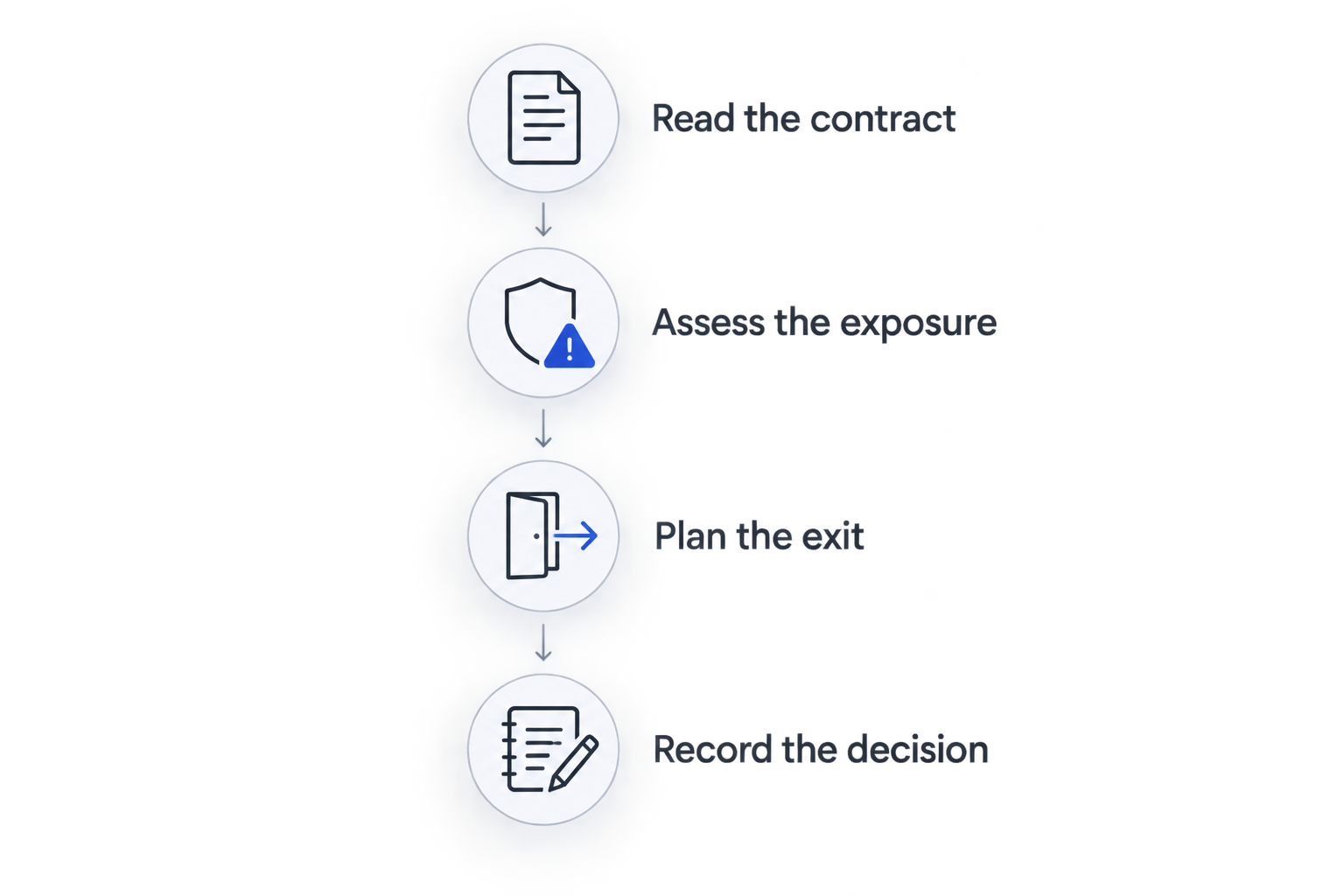
A market opinion does not replace a contract and exposure check.
Rehearsal helps you identify operational mistakes before an order reaches the market. Check the symbol and quantity again on the order ticket. Treat an unclear contract term as an unresolved question rather than something to discover through a live position.
05
Can you trade commodities without physical delivery?
Yes. Some financial instruments provide exposure to commodity movements without requiring you to store the underlying material. That does not mean every commodity contract excludes delivery obligations.
Check the settlement method and expiry rules before opening a position. Futures can have physical-delivery or cash-settlement terms. Other financial contracts have their own conditions. The commodity name alone does not establish what you own or owe.
Does a stop-loss make commodity trading safe?
No. A standard stop-loss can help structure an exit but does not guarantee its execution level. Gaps and changing liquidity can produce a different result from the one planned.
Order protection and position sizing address different problems. An exit instruction tells the platform what to do under specified conditions. Quantity determines how much the resulting movement affects the position.
Does a profitable practice trade show that you are ready?
No. A profitable practice trade shows an outcome under those practice conditions. It does not establish repeatability or reproduce every feature of live execution.
Review whether you selected the intended contract and quantity. Check whether the exit followed your recorded plan. A favourable result does not correct an order-entry mistake.
Frequently asked questions
Can I trade commodities if I have never traded before?
Yes, subject to eligibility and product rules. Inexperience does not establish suitability. Learn the contract terms, exposure and order risks before considering a live position.
Is gold easier for beginners than oil?
Gold is not automatically easier than oil. Their market drivers differ, while the contract size and chosen quantity determine the exposure of each position.
Do I need to own physical gold to trade gold?
No. Some financial instruments provide gold exposure without physical ownership. Check what the contract represents and how it settles.
Is the margin requirement the most I can lose?
No. Margin is required to support a position and is not a maximum-loss amount. Understand the account terms and applicable protections separately.
Can a commodity stop-loss execute beyond its trigger?
Yes. A standard stop-loss can execute at a different level when market conditions change. A gap can leave no executable market at the trigger level.
What should I write in a commodity trading journal?
Record the instrument, quantity, entry reason, intended exit and actual execution. Keep the decision record separate from whether the trade made or lost money.
Does practising guarantee that live commodity trading will go well?
No. Practice helps you learn the workflow but does not guarantee live results. Execution conditions and the experience of risking real funds differ.
Conclusion
Beginners can trade commodities in 2026 where eligibility and product rules permit. Preparation starts with the contract rather than a prediction. Understand what you are trading before deciding whether to trade it.
One final check: opening and immediately closing a position is not necessarily financially neutral. The difference between buying and selling quotations affects the result even without a change in the underlying market. Include execution mechanics in your preparation, not just chart direction.
Understand the contract. Explain the exposure. Then assess whether participation is suitable.
Related guides
- How market gaps affect stop-loss orders
- How oil reacts to supply and demand
- Setting trading process goals
This article is for educational purposes only and does not constitute investment advice. Trading CFDs and other leveraged products carries a high level of risk and may not be suitable for all investors.