Trading process · 2026
Track trading rule adherence by recording your rules before a trade. Compare each decision with those rules using saved evidence. Mark each applicable rule as followed, breached or unverified. Record the financial result separately because a profitable trade can still break your rules.
Key takeaways
- Trading rule adherence measures decisions against written rules, not profits against expectations.
- Keep a trading journal with timestamps, rule versions and evidence for each decision.
- An unverified decision is not a confirmed breach. Keep missing evidence visible.
- VCG Markets trading education separates process review from financial outcomes.
01Define the rule
02Save the evidence
03Review the decision
01
How do you track whether you followed your trading rules?
Start with a written pre-trade decision checklist. Give each rule an observable condition. Then preserve the information needed to check that condition after the trade.
- Write the rule before acting. State the required action and when it applies.
- Record the decision. Save the intended entry, position size and exit instructions relevant to your rules.
- Preserve the evidence. Keep the order record, timestamps and relevant notes or screenshots.
- Classify each rule. Mark followed, breached, unverified or not applicable.
- Review the pattern. Compare repeated breaches without changing the original record.
Use this sequence for your 2026 journal. A later review should show what you knew when you acted. It should not substitute the explanation that became convincing after the outcome.
02
Why this matters
A trade result does not establish whether you followed a plan. A loss can occur after every documented rule was followed. A gain can occur after an unplanned increase in exposure.
Keep the process verdict separate from the result. Otherwise a winning rule breach receives approval while a planned loss receives blame. Neither judgment tells you accurately what happened.
Adherence also does not prove that the rules themselves work. You need a separate assessment of the strategy and its risks. A process score describes compliance with your plan. It does not validate the plan.
03
Write rules you can actually check
A rule such as 'stay disciplined' leaves the reviewer to interpret your intentions. Replace it with an action you can verify. For example: record the planned position size before submitting the order.
Separate rules that contain several decisions. An entry condition, an exposure check and an exit instruction need separate records. Otherwise a single pass hides which parts were followed.
- Trigger: State the condition that makes the rule applicable.
- Action: State what you must do or avoid doing.
- Evidence: Specify the record that proves the action.
- Exception: Document any permitted exception before using it.
Label your current rulebook '2026 trading rules' and give revisions their own effective dates. Keep earlier versions attached to the decisions they governed. A rule added later cannot establish a breach in an earlier trade.
This creates a boundary between reviewing a decision and improving a rule. You can identify a weakness in the plan without rewriting the standard used to assess the original action.
04
Use evidence-based status labels
Use the same status definitions throughout your journal. Missing evidence needs its own label. It is not proof of adherence or proof of a breach.
| Status | Meaning | Boundary |
| Followed | Evidence matches the rule. | Does not establish profitability. |
| Breached | Evidence contradicts the rule. | Does not explain the cause. |
| Unverified | Evidence is insufficient. | Keep outside confirmed verdicts. |
| Not applicable | The rule's trigger did not occur. | Not an additional success. |
Record the evidence beside the status. An order history can show an amendment. It cannot establish your reason for making it. Keep the observed action separate from your explanation.
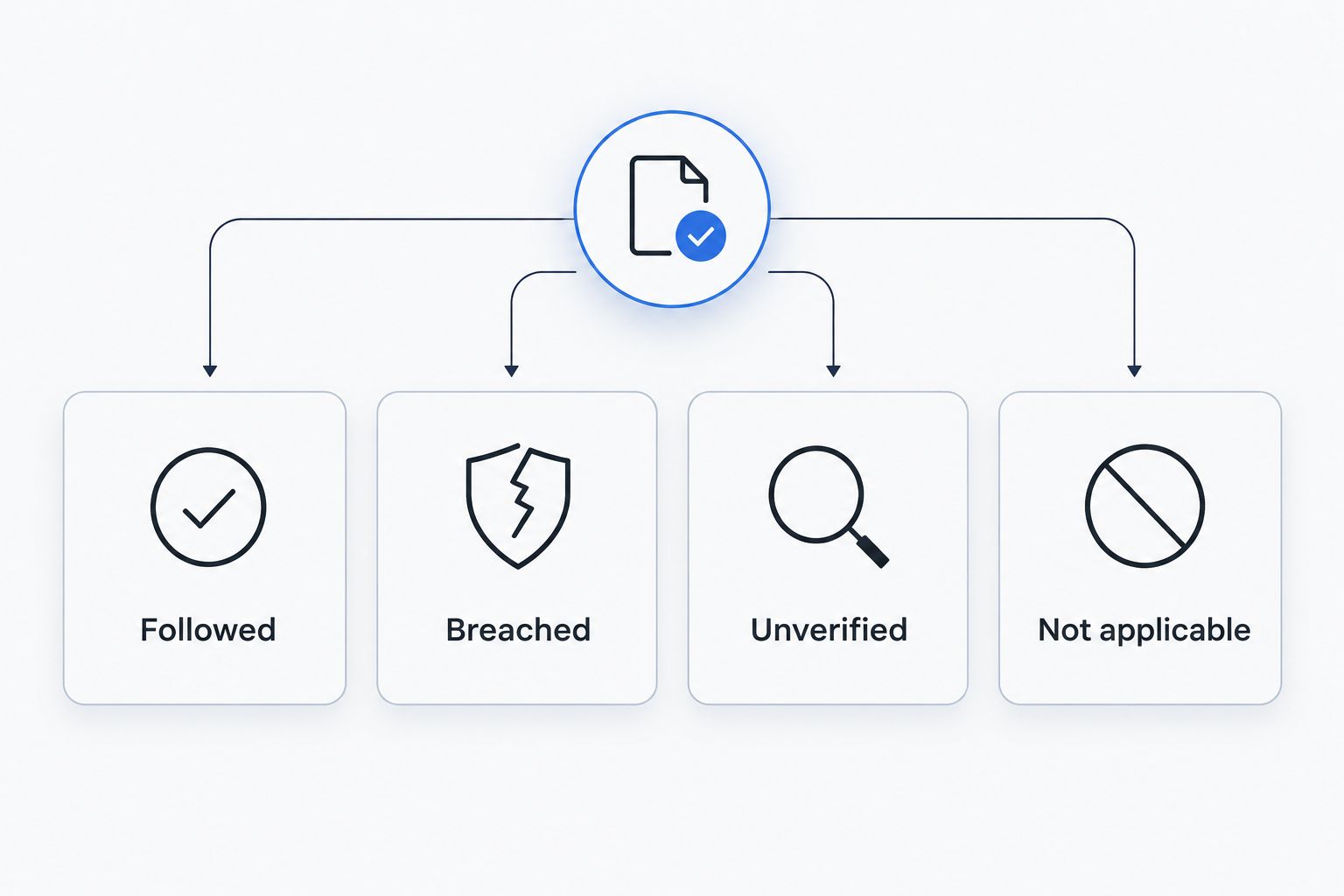
Missing evidence stays separate from confirmed adherence and confirmed breaches.
If new evidence resolves an unverified entry, update the status with a dated note. Preserve the original classification. Your journal should show what changed and why.
05
Build a journal that preserves the decision
Use a separate entry for each rule check within a trade record. That structure lets you inspect recurring breaches by rule. A single overall trade grade cannot provide the same detail.
- Trade reference: Instrument, direction and order identifier.
- Decision time: Timestamp with the time zone clearly recorded.
- Rule version: The wording active when you acted.
- Planned action: What the rule required in that situation.
- Observed action: What the saved record shows.
- Evidence location: The relevant order record, screenshot or note.
- Status and explanation: The classification and its factual basis.
- Financial result: A separate field that does not determine adherence.
Keep planned instructions separate from execution outcomes. If your rule required submitting a particular order, check the submitted instruction. Do not automatically classify a different fill price as a decision breach.
For your 2026 review, retain the original entry and append corrections. Avoid silently replacing an earlier explanation. A journal loses its value as evidence when later interpretations overwrite the record.
06
Why trading rule adherence scores vary
Define the calculation before comparing scores. A transparent measure divides confirmed followed checks by confirmed followed checks plus confirmed breaches. Report unverified checks separately so a cleaner score cannot hide incomplete evidence.
- Rule scope: A broad rule covers different decisions from a narrowly defined check.
- Applicability: Some rules activate only when a specified event occurs.
- Evidence coverage: Missing records change how much you can verify.
- Rule revisions: Changed wording creates a different assessment standard.
- Aggregation: A trade-level grade and a rule-level score measure different things.
- Weighting: Treating every check equally does not distinguish the consequences of different breaches.
Keep serious breaches visible even when the overall score looks strong. Completing routine checks does not cancel a separate exposure-rule breach. Show the rule breakdown beside any summary.
When comparing periods in 2026, use the same definitions and disclose changes. If the rules changed, separate the periods. Otherwise an apparent improvement can reflect a different scoring method rather than different decisions.
FAQ
How do I know whether I followed my trading plan?
Compare your recorded decisions with the rules written before the trade. Use timestamped evidence and mark any decision you cannot verify as unverified.
Does a profitable trade mean I followed my rules?
A profitable trade does not prove trading rule adherence. Assess the decision against the written rule and record the financial result separately.
How do I calculate trading rule adherence?
Divide confirmed followed checks by confirmed followed checks plus confirmed breaches. Report unverified checks separately and exclude rules that did not apply.
Should missing journal entries count as rule breaches?
Missing evidence does not establish a breach of the underlying trading rule. If keeping a journal is itself a written rule, assess that documentation requirement separately.
Can I change a rule after reviewing a trade?
You can revise a rule for future decisions. Keep its effective date and assess earlier trades against the version active when those decisions occurred.
Does a different execution price mean I broke my trading rules?
A different execution price alone does not establish a rule breach. Compare the submitted instruction with the rule and review the execution outcome separately.
Can a behavioural performance score replace my trading journal?
A behavioural performance score does not replace the evidence needed to verify a specific rule. Retain the rule wording, decision record and supporting evidence.
Conclusion
Record decisions not to trade when a rule required you to stay out. An order history cannot show an order you correctly chose not to place. That evidence belongs in your journal too.
Review the decision using only information available at the time. Then consider what to change for the next decision. Keep those tasks separate.
Write the rule. Save the evidence. Review the action separately from the outcome.
Related guides
- Trading process goals
- Missing data in a trading review
- Hindsight bias in trade review
- Performance scores in context
This article is for educational purposes only and does not constitute investment advice. Trading CFDs and other leveraged products carries a high level of risk and may not be suitable for all investors.


