Trading Psychology · 2026
Winning streaks can change your perception of risk when recent profits feel like evidence that your next trade is safer. Overconfidence after winning trades begins when confidence rises without a matching improvement in the evidence behind your decisions.
Key takeaways
- Overconfidence after winning trades means confidence has moved beyond the evidence supporting your trading decisions.
- Winning streaks do not establish that your next position carries less risk.
- Trading psychology reviews should compare decision quality with results, not treat them as interchangeable.
- VCG Markets supports trading performance review through VCG ONE. Behavioural scores still need context.
01Separate results from process
02Check changes in exposure
03Review decisions consistently
01
Why can winning streaks change your perception of risk?
A profitable result tells you what happened. It does not establish why it happened or whether the same conditions still apply. A sound decision and a weak decision can both finish in profit.
That distinction matters when success changes your next decision. You might increase exposure or accept a setup you previously rejected. Separate positions can also share the same underlying risk. See how [correlated pairs create hidden exposure](https://vcgmarkets.com/en/blog/correlated-pairs-hidden-exposure).
The warning sign is not feeling confident. It is changing your standards because you feel confident. A winning streak provides observations to examine. It does not remove uncertainty from the next trade.
| Review question | Evidence-based confidence | Overconfidence |
| What supports the next entry? | Current conditions and documented criteria | Recent wins treated as sufficient evidence |
| Why has exposure changed? | A documented change in the trading plan | A feeling that profits make losses less important |
| What would challenge the decision? | Defined evidence that the setup no longer holds | Contrary evidence dismissed because the streak continues |
02
Why this matters beyond the winning streak
Your perception of risk influences what you do before a loss occurs. Larger positions change the financial effect of a price move. More positions can add shared exposure. A profitable account history does not cancel either effect.
The relevant comparison is not simply winning versus losing. It is the risk you intended to take versus the risk you actually took. A profitable trade can still reveal a process problem if its size or entry broke your own rules.
For a 2026 trading review, keep the result separate from the explanation. Record what you knew before entry. Then compare that record with what happened. Reconstructing the explanation after a win makes it harder to distinguish planning from hindsight.
03
Why overconfidence after winning trades varies
A winning streak does not affect every decision in the same way. Look for the mechanism behind a change in behaviour rather than assuming that confidence itself is a problem.
- Attribution. Crediting skill for every win leaves market conditions and chance out of the explanation. Record what the strategy contributed and what remains uncertain.
- Recency. Recent outcomes can dominate your assessment. Compare the streak with the broader record rather than treating it as the whole record.
- Outcome bias. A profitable exit can make an unsupported entry appear justified. Review the decision using information available at entry.
- Profit framing. Treating gains as money that matters less changes your attitude to losing them. Realised profits remain part of your account equity.
- Shared conditions. Several wins can depend on the same market trend. Repeated success in that setting does not establish performance under different conditions.
These are review categories. They are not a diagnosis based on a profitable week. The useful evidence is a visible change in entries, sizing, exits or treatment of contrary information.
04
How do you review a winning streak without dismissing progress?
Review profitable trades with the same questions you use for losing trades. Consistent questions let you recognise improvement without treating every positive result as proof of better judgement.
- Entry evidence. Retrieve the original reason for the position. Separate the planned setup from explanations added after the result became known.
- Planned exposure. Compare the intended size and exit conditions with the actual position. Note any change made because previous trades had won.
- Shared exposure. Group positions by the market movement they depend on. Different instrument names do not necessarily mean different sources of risk.
- Decision review. Assess rule adherence before judging profitability. Record both strengths and departures from the plan.
- Change record. Document any proposed adjustment and its evidence. Keep a feeling of confidence separate from a reason to change the process.
Use the same fields throughout your 2026 trading journal. Consistency makes changes visible. A detailed account of wins beside sparse notes on losses creates an uneven record.
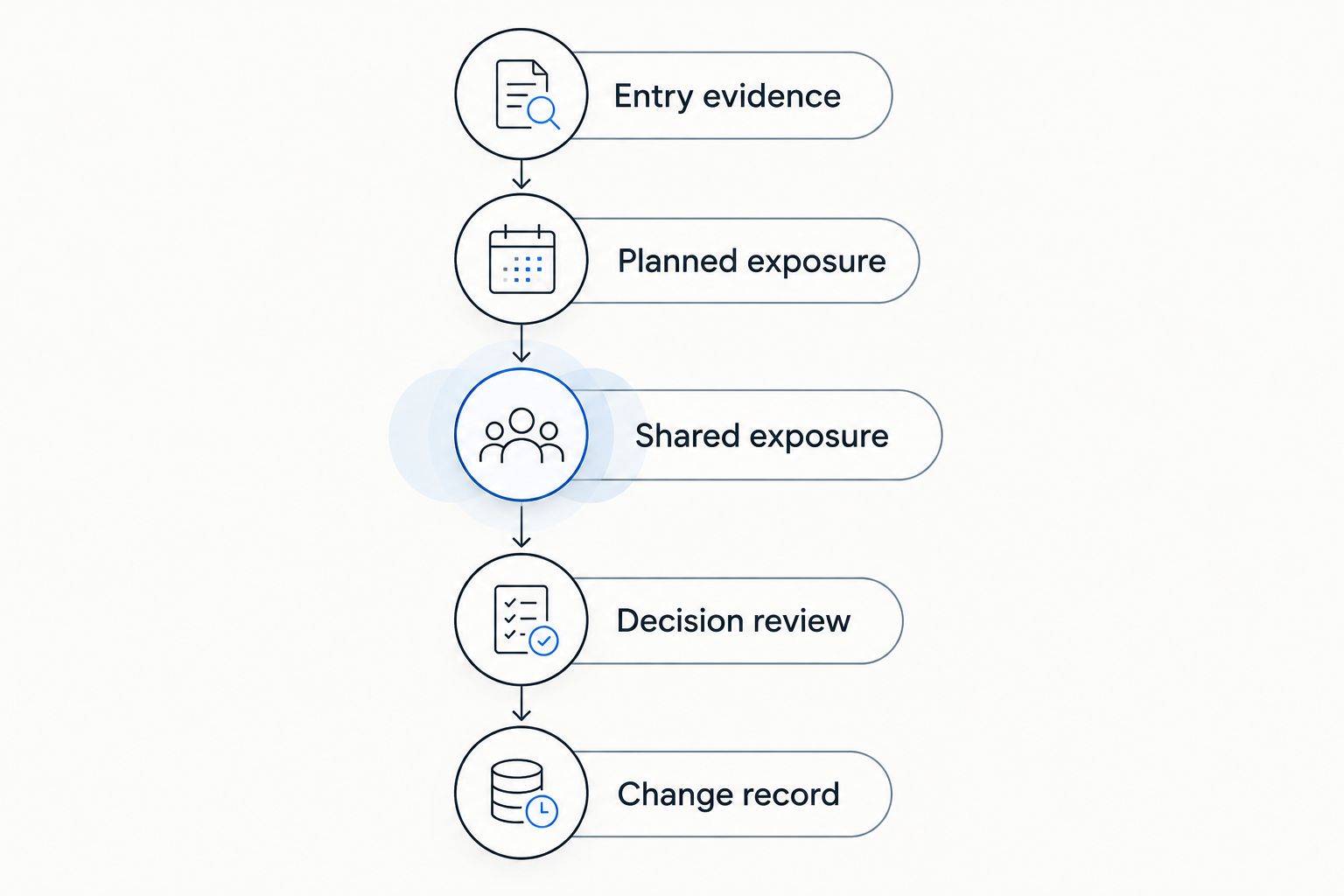
Review the decision process before using a profitable result to justify a change.
A journal also has limits. Missing entries and explanations written later can distort the review. Mark uncertainty rather than filling gaps with a story that fits the outcome.
The same discipline applies to automated feedback. Read about [performance scores in context](https://vcgmarkets.com/en/blog/ai-performance-scores-context) before treating a score change as evidence that your next trade deserves more exposure.
05
Does a winning streak mean your strategy has improved?
A winning streak alone does not establish strategy improvement. It shows profitable outcomes over the period observed. Improvement requires examining the decisions, exposure and conditions behind those outcomes.
A strategy can benefit from conditions that suit it without becoming more reliable elsewhere. Equally, better rule adherence can be genuine progress even when a particular trade loses. Keep those assessments separate.
Should you change position size after consecutive wins?
Consecutive wins alone do not justify a position-size change. Assess any change against your documented approach to exposure and account risk. The emotional effect of a streak is not a substitute for that assessment.
Is confidence after a profitable trade always a problem?
Confidence after a profitable trade is not automatically overconfidence. The distinction is whether your confidence remains tied to evidence and whether you still apply the same decision standards.
Frequently asked questions
What is overconfidence after winning trades?
Overconfidence after winning trades is confidence that exceeds the evidence supporting your decisions. It can appear when recent profits replace checks on entry quality, exposure or contrary information.
Can profitable trades still involve poor decisions?
Profitable trades can still involve poor decisions. A positive outcome does not establish that the entry followed your rules or that the exposure matched your plan.
How many wins prove that a trading strategy works?
No fixed number of consecutive wins proves that a trading strategy works. Assessment also requires the wider record, losses, exposure and the conditions in which trades occurred.
How do I distinguish confidence from overconfidence?
Evidence-based confidence remains open to contrary information. Overconfidence appears when a feeling of certainty replaces your usual checks or makes departures from the plan seem justified.
What should I record in a trading journal in 2026?
A 2026 trading journal should separate entry evidence, planned exposure, actual decisions and results. Record departures from the plan even when the trade finishes in profit.
Does VCG Markets behavioural feedback predict my next result?
VCG Markets behavioural feedback does not establish the result of your next trade. Use performance feedback as review information rather than evidence that a position cannot lose.
Conclusion
One useful final check is to hide the profit figure while reviewing the entry. Ask whether the decision still looks justified using only the information available at the time. Then restore the result and assess it separately.
This does not erase progress. It distinguishes a decision you can explain from an outcome you were pleased to receive. That distinction matters after wins just as much as after losses.
A winning result is evidence to review. It is not permission to abandon your risk process.
Related guides
This article is for educational purposes only and does not constitute investment advice. Trading CFDs and other leveraged products carries a high level of risk and may not be suitable for all investors.


